Convergence of Low-Code/No-Code with Pro-Code Platforms
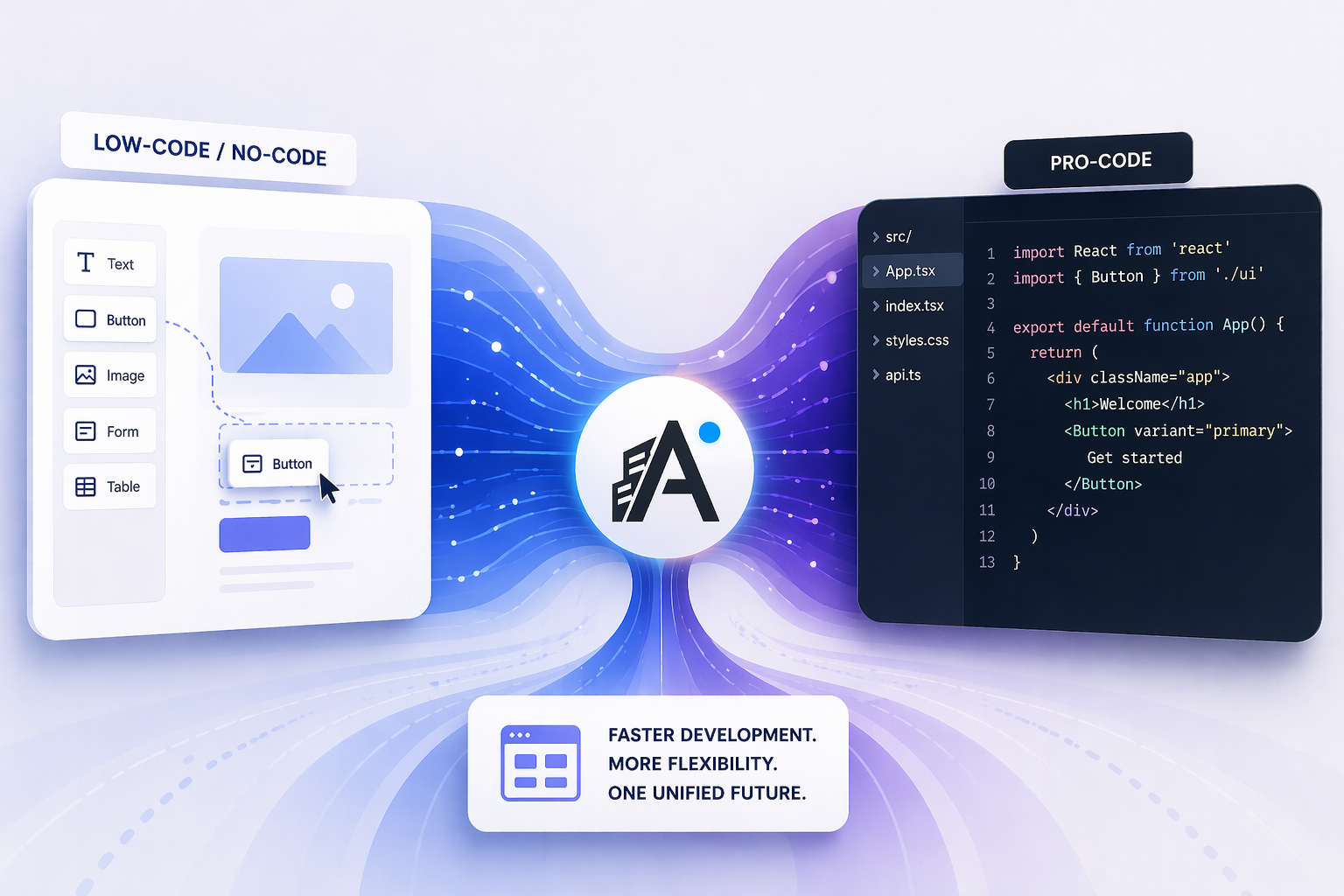
In the early 2000s, there was a lot of excitement around Rapid Application Development tools — drag-and-drop IDEs like Visual Basic and Visual C++. In the late 2000s, enterprises adopted SharePoint and similar platforms to build web applications. Then came the late 2010s and Microsoft Power Platform and similar technologies appeared.
These platforms have matured a lot, and low-code tools are much better known today — but the underlying programming model is still hard to support. And with the new advancements in AI development, a new convergence is coming.
1. A promise that wasn’t fully delivered
The pitch for low-code/no-code platforms was clear: business users could build applications on their own, no coding experience needed, without involving IT. In practice, here’s what I’ve actually seen:
- New teams of low-code/no-code developers end up being created inside IT anyway.
- The user experience and visual design falls short of today’s expectations.
- Teams often build new apps rather than updating existing ones, because changes carry too much risk of breaking things.
2. The Achilles’ heel of low-code platforms
The same pattern repeats with every wave of these tools: you can build something quickly, ship value fast, and work around the platform’s limitations — for a while. But over time, the effort to maintain and scale grows exponentially.
The platform model that made it easy to start is the same one that makes it painful to evolve.
3. How AI is changing the equation
We’re now in the second half of the 2020s, and AI-assisted development has shifted things significantly. Whether through spec-driven approaches or vibe coding, developers can prompt an AI agent to build software that is more scalable, more robust, and better looking — and even for prototyping, the speed and outcome beat traditional low-code apps.
In recent comparisons I ran between low-code and AI-assisted development, the difference in sophistication, speed, and quality was striking.
4. What challenges will remain
AI development removes a lot of the scalability constraints — you have the full range of programming languages, architectures, frameworks, and libraries available. But maintainability is still something to watch closely.
When AI-generated code is produced without a real understanding of what’s being built, it can become a serious problem once that solution runs critical business processes in production. The tool changes, but the software engineering discipline required doesn’t.